Secure top-quality concrete flooring in Markham that's engineered for performance and compliance. Our service includes carefully formulated compositions, tested consistency/aeration/thermal and dampness/alkalinity/moisture level assessment for reliable hardening and attachment. We handle abrasive blasting/mechanical grinding to ICRI CSP, crack/joint repair, and rapid-dry primers. Opt for refined concrete finishes, resin-based/advanced coating solutions, or stained/dyed finishes with ultraviolet-resistant coatings and documented FF/FL and layer dimensions. We validate qualifications, assurances, and project duration to control risk, cost, and downtime-then, explore how industry-tailored solutions match your needs.
Critical Points
- Professional concrete flooring solutions in Markham: featuring precise mix formulation, structural reinforcement, joint placement, and curing processes following industry codes for predictable durability and performance.
- Certified contractors with WSIB and liability coverage, delivering thorough written project outlines, quality control assessments, guarantees meeting ASTM/CSA requirements, and realistic delivery timeframes.
- Surface prep and moisture control: RH and pH analysis, concrete surface profile, crack and joint restoration, vapor barriers, and compatible primers for warranty-compliant installs.
- When it comes to polished, stained, or dyed surfaces, we deliver comprehensive solutions including advanced grinding methods, lithium-based concrete strengthening, UV-resistant sealers, anti-slip safety measures, and sample demonstrations to verify desired appearance.
- Epoxy and polyaspartic coatings provide exact mil thickness, moisture-blocking primers, non-slip aggregates, and certified FF/FL measurements for producing durable, easy-care floor solutions.
The Importance of Expert Concrete Flooring in Markham
Despite concrete's apparent simplicity, expert implementation in Markham directly impacts weight-bearing capacity, surface evenness, moisture management, and overall lifecycle costs. It's essential to have a qualified contractor who expertly tailors mixture formulation to match slab thickness, reinforcement specifications, and ground conditions, then validates slump characteristics, air volume, and temperature parameters for predictable curing. Professionals account for local environmental factors-such as freezing and thawing, snow-removal chemicals, and moisture levels-by implementing controlled air content, appropriate water-cement levels, and strategic joint placement.
Furthermore, you prevent compliance risks. Professional workers comprehend building codes, coordinate vapor barriers, reinforcements, and curing compounds, and record compaction and compressive strength tests. Precision finishing achieves FF/FL targets, minimizing trip hazards and racking issues. Appropriate drainage angles and isolation joints stop heaving and cracking. In short, professional methods safeguard structural reliability, minimize callbacks, and prolong service life.
Polished Concrete: Combining Beauty and Durability
Enhance functionality and appearance with polished concrete that produces strong, dust-resistant, glossy floors engineered for heavy use and longevity. You obtain a hardwearing surface enhanced through progressive metal-bond grinding, resin honing, and lithium densification to optimize abrasion resistance and read more reduce porosity. We then seal and burnish to ensure clarity and chemical tightness.
Achieve the sheen you require-from satin to micro mirror finish-while keeping slip resistance through varied aggregate exposure and precise light reflectivity management. This increases lighting performance, minimizes maintenance, and enhances cleaning cycles. Surface flaws and seams are resolved before finishing to eliminate early deterioration and surface marking.
Expect predictable lifecycle costs, quick return-to-service, and easy compliance with hygiene and dust standards. Polished concrete delivers reliable performance without surface treatments, peeling, or delamination risk.
Epoxy Coatings for Garages, Shops, and High-Traffic Areas
You'll need epoxy coatings that can resist wear and tear, tire marks, chemicals, salt exposure, and various solvents without compromising or staining. To attain this type of performance, you should mandate mechanical surface prep (via grinding or shot blasting), pH and moisture analysis, and a suitable primer to guarantee maximum bond strength. Then you'll need to apply the epoxy following manufacturer MVT guidelines, monitor application thickness and cure duration, and top it off with a UV-stable topcoat when traffic or UV exposure demands it.
Durability and Chemical Resistance
When projects demand a floor that won't fail under load, epoxy coatings deliver high compressive strength, durability against wear, and demonstrated chemical protection for garages, fabrication shops, and high-traffic corridors. You achieve durability from strong molecular bonds within the bonded structure, resulting in impact protection, structural integrity, and lasting durability. Epoxy withstands tire marks, industrial vehicles, and mobile equipment without surface damage or deterioration.
You also prevent degradation from different chemicals, including oils, fuels, and road salts. The protective film blocks penetration, reducing deterioration and material breakdown when exposure occurs. Temperature fluctuations and water vapor are managed with limited expansion, maintaining bond integrity. Specify solids content and resin-hardener ratios to match anticipated conditions. With the right system, you reduce maintenance, increase time between services, and maintain continuous operation.
Surface Preparation and Application
Prior to epoxy application, proper substrate preparation determines the maximum performance. It's essential to check slab moisture, pH, and tensile pull-off, then clear away laitance and contaminants. Carry out surface preparation using shot blasting or diamond grinding to reach the designated surface profile, ensuring clean, open pores. Address cracks and joints with joint filling compounds, and detail edges where failures start.
Start by controlling porosity using rapid-dry primers that accommodate residual moisture and reduce recoat windows. Broadcast to rejection in areas slip resistance or additional thickness is needed, then spread the body coat with roller or squeegee application at the recommended thickness, maintaining wet edge consistency and proper coverage. Control ambient and substrate temperatures, dew point, and ventilation. Finish with a UV-resistant topcoat for defense against surface damage, chemical contact, and allow for easy maintenance in parking areas and busy spaces.
Custom Concrete Staining and Dyeing for Unique Colors and Patterns
We can create an exact color palette by applying chemical stains for multi-toned finishes or liquid dyes for solid, even tones that meet your design requirements. We'll engineer decorative surface patterns-saw‑cuts, stencils, layered applications, and controlled mottling-to produce natural stone, tile patterns, or custom designs with consistent repeatability. To lock in color and performance, we'll determine the optimal sealer (penetrating, polyurethane, or polyaspartic), then create a maintenance plan with neutral pH cleaners and periodic reseals according to wear.
Color Palette Options
Color plays a vital role in designing concrete surfaces, and stained and dyed applications yield precise, repeatable results. You choose from standardized color palettes that correspond to brand standards or project palettes, then we verify with on-site samples under your specific lighting conditions. Acid stains generate variegated Earthy tones-sand, umber, slate-suited for hospitality, retail, and civic spaces seeking gentle illumination. Acetone dyes and water-based dyes expand into saturated Jewel tones-jade, lapis, garnet-supporting bold wayfinding and premium merchandising.
We analyze substrate porosity, moisture, and cement chemistry to predict uptake, then define preparation ratios, processing time, and application steps for consistency. UV-stable sealers preserve coloration, while gloss levels tune reflectance targets. You maintain uniform appearance across processes with recorded mixing specifications and quality checks, guaranteeing uniform, lasting performance.
Effects of Pattern and Texture
After establishing tones in place, texturing and patterning become design tools that control traffic, reduce glare, and define spaces. You can choose stained or dyed concrete as the foundation, then add controlled patterns to achieve measurable results. Scored grids, saw-cut borders, and laser etched patterns create wayfinding solutions and product zones without additional fixtures. Textured surfaces offer slip-resistant surface patterns while simulating stone, slate, or custom logos. Chemical treatments create natural effects; liquid stains provide uniform, reproducible shades for crisp motifs.
We strategically plot movement corridors, loading zones, and retail spaces so textures guide movement and rest areas. Non-reflective surfaces decrease brightness with LED illumination, eliminating glare on camera and enhancing viewing ease. Edge detailing and inlays complement corporate guidelines, maintaining resilience, protection, and rapid setup.
Maintenance and Sealing Guidelines
Ensure sustained performance by aligning the sealer with the stain/dye system, exposure requirements, and usage level. Choose penetrating sealers for vapor-transmissive, UV-protected stained floors; choose high-solids urethanes or polyaspartics when abrasion and harsh substances are expected. Verify VOC restrictions and slip resistance ratings. Ready thoroughly: ensure neutral pH after staining, perform 200-400 grit burnishing if specified, and install within the manufacturer's designated recoat timeframe.
Implement periodic evaluations to assess finish quality, film integrity, and wear marks. Track wear spots at high-traffic zones and heavy-use areas; schedule selective recoat before surface degradation. Establish a daily spill management system: isolate, blot, neutralize, and rinse - never use acidic cleaners or undiluted degreasers. Utilize microfiber dust control, autoscrub with pH-neutral detergent, and use sacrificial finish in high-traffic areas. Track maintenance statistics to enhance lifecycle costs.
Best Practices for Surface Preparation and Moisture Mitigation
Before installing any coating or overlay, comprehensive surface preparation and moisture control establish performance and warranty viability. The process starts with various tests: ASTM F2170 RH probe analysis, ASTM F1869 calcium chloride testing, and pH measurements. Then, remove contaminants, then execute substrate profiling to the designated ICRI CSP, using diamond grinding or shot blasting. Repair all cracks, spalls, and joints using appropriate repair products, and vacuum clean to create a dust-free surface before the priming phase.
Address moisture issues at the source. Confirm the presence and functionality of under-slab moisture barriers; where barriers are absent or compromised, put in place surface moisture control solutions matching your slab's vapor emission rates. Handle moving cracks and connections using flexible sealants to accommodate shifts. Choose primers based on epoxy or urethane appropriate for moisture circumstances. Keep records of measurements, preparation procedures, and curing durations to ensure compliance with manufacturer warranties and achieve reliable outcomes.
Commercial, Industrial, and Residential Solutions
Proper preparation and moisture management create the groundwork for cross-segment performance, but application priorities vary by specific needs. In commercial settings, you have to harmonize wear patterns, visual identity, and lifecycle costs. You select green building materials for sustainability goals, surface strengtheners for abrasion resistance, and finishes engineered for slip resistance without reducing ease of cleaning. You additionally plan for temperature-related movement at entrance areas and light-filled spaces.
For industrial environments, you must prioritize impact resistance, chemical tolerance, and forklift traffic patterns. You methodically develop joint patterns for storage areas, determine optimal reinforcement needs, and apply protective finishes that control process-related thermal expansion. Sound dampening is crucial in proximity to testing labs and QC departments.
When it comes to residential spaces, we prioritize convenience and minimal upkeep. You'll find acoustic dampening materials, radiant-prepared base layers, and protective coatings that provide slip resistance while maintaining a warm and inviting appearance.
Picking the Right Contractor: Qualifications, Guarantees, and Scheduling
When selecting a concrete flooring specialist in Markham, review expertise and track record with the same rigor you demand for mix designs. Confirm the contractor works with licensed installers, carries WSIB and liability insurance, and has manufacturer certifications for the specified system (polished, epoxy, urethane-cement, or overlays). Check project references with equivalent loads, exposure, and schedule constraints.
Require a documented scope that includes: substrate prep, humidity management, structural support, application, surface completion, and quality control testing. Secure a warranty that clearly defines guarantees, exceptions, and turnaround times; tie it to quality benchmarks including structural integrity, surface uniformity (FF/FL), and film thickness.
Review schedule feasibility by checking: resource scheduling, machinery access, curing periods, and backup arrangements for adverse weather and supply disruptions. Establish a well-defined issue resolution framework, emergency response contacts, and regular update schedule.
Financial, Maintenance, and Value Assessment
After finalizing these key project parameters, align the budget to long-term operational efficiency, instead of focusing on upfront costs. Review installation expenses alongside total cost of ownership to include structural requirements, reinforcement details, joint planning, curing procedures, and surface treatment solutions. Choose coating options according to durability needs, chemical protection demands, and anti-slip properties to prevent early-stage issues.
Define maintenance plans ahead of the pour. Organize chemical maintenance, resealing schedules, and crack mitigation techniques to protect finish quality and levelness specifications. Calculate expenses for surface refinishing work, joint filler replacement, and moisture mitigation when necessary.
Consider total cost of ownership: energy reflection (lighting cost savings), downtime periods for upkeep, and anticipated lifespan. Review warranty specifications related to loads and environmental factors. Quantify resale value by demonstrating compliant surfaces, reduced maintenance backlog, and transferable warranties. You'll reduce unforeseen spending and preserve asset value.
Popular Questions
Do You Accommodate Non-Business Hours Implementation to Minimize Business Disruption?
Indeed. Installation can be arranged after hours or on weekends to reduce downtime. Our team manages overnight arrangements and send emergency personnel when necessary, while coordinating operations to maintain access and safety. Our team manages curing procedures, noise reduction, and dust management to satisfy operational constraints. We provide thorough planning, site-specific staging, and quick deployment. We'll provide work progress notifications, quality control confirmation, and a documented handoff, making sure your facility resumes operations as scheduled with high-quality, compliant, and pristine results.
Can You Install Radiant Floor Heating In Concrete Flooring Systems?
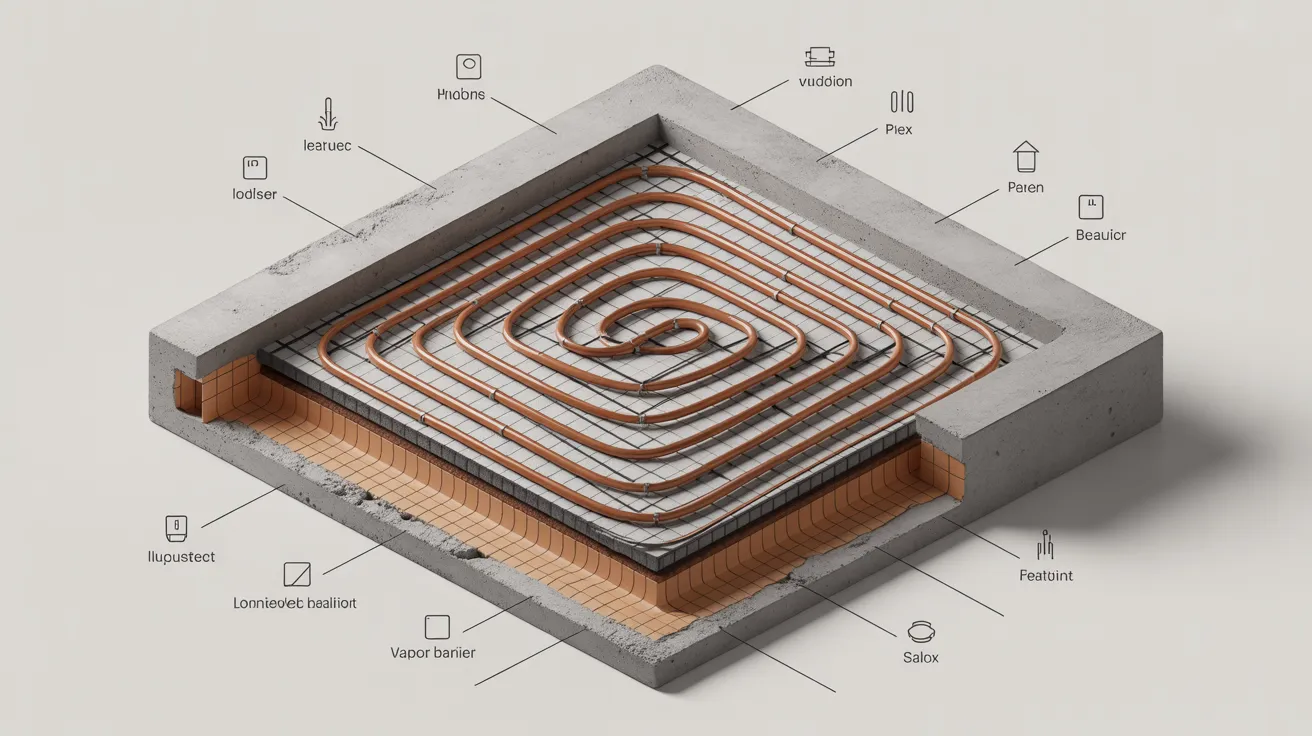
Absolutely, you are able to integrate radiant floor heating with concrete flooring systems. Imagine it as creating a precision instrument: accuracy is crucial. You choose hydronic systems for spacious areas and optimal energy use, or electric mats for specific areas and quick heating. You synchronize slab thickness, insulation, vapor barriers, and control joints to protect tubing/cables. You validate load calculations, spacing, and manifold/electrical layouts, then perform pressure and continuity tests, maintaining uniform heat, minimal thermal lag, and long-lasting performance.
Which Eco-Friendly and Low-VOC Materials Do You Offer?
You can select eco-friendly solutions utilizing low VOC sealers, water-based epoxies, and high-solid polyurethanes to lower environmental impact and installation time. Choose formulations with reused aggregates, supplementary cementitious materials (fly ash, slag), and regional aggregates to minimize embodied carbon. Choose lithium densification products with ultra-low VOC profiles. Specify polished concrete to eliminate coating applications where practical. You'll get resilient, wear-resistant surfaces, conforming to LEED/WELL criteria, without sacrificing curing duration, material bonding, or long-term durability.
Can You Assist With Permits and Condominium Board Communications in Markham?
We deliver permit assistance and condo coordination in Markham. You won't struggle with red tape; we prepare applications, file drawings, and follow approvals. We coordinate with property managers, security, and boards to align bylaws, noise windows, elevator bookings, and load limits. We furnish insurance certificates, WSIB, site-specific safety plans, and engineer letters as required. You get clear timelines, stakeholder updates, and documented compliance, guaranteeing your project stays on schedule and inspection-ready.
How Well Can You Match Current Concrete Finishes in Partial Renovation Projects?
Absolutely, it's possible to match existing concrete finishes during partial renovations. Start with a detailed assessment, carrying out mix design analysis, granular composition study, and finish calibration. Use color matching via pigments, stains, or dyes fine-tuned with test panels. Execute texture replication by implementing precise trowel finishing, abrasive blasting textures, or surface stamping methods. Manage cure rates and gloss by applying densifiers and guard coatings. Verify with side-by-side mockups under project lighting to ensure seamless integration.
Final Thoughts
You want a floor that performs like a well‑tuned engine-built to spec, clean, and long-lasting. With concrete polishing, epoxy coatings, and stain treatments, you'll align appearance with durability, usage, and longevity. Careful surface prep and moisture mitigation eliminate expensive repairs. Verify experience, warranty coverage, and project planning to maximize returns while minimizing risk. When you choose proven Markham specialists, you'll guarantee a finish that resists abrasion, chemicals, and downtime while minimizing maintenance and total cost of ownership for years.